

Trucks rumbling past at 5am. Buses braking outside the front window. A constant hum of traffic that never quite switches off. For thousands of Melbourne homes on busy roads, freeways and growing suburban corridors, noise is part of daily life, and it can wear you down.
If you have been searching for a solution, you have probably come across acoustic fencing. But does it actually work, or is it just a heavier fence with a fancy name? At A Class Fencing Solution, we design and install acoustic fencing across Melbourne and Victoria, and in this guide we explain how it works, what makes a real difference and what you can realistically expect.
What Is Acoustic Fencing?
Acoustic fencing is a fence designed specifically to reduce the amount of noise that passes from one side to the other. Unlike a standard fence, which is built mainly for privacy and boundaries, an acoustic fence is built with sound control in mind.
That means it is heavier, more solid and carefully sealed, with no gaps for sound to leak through. Common uses include:
- Homes near freeways, main roads and train lines.
- Properties next to schools, sports grounds or commercial premises.
- Townhouses and units with close neighbours.
- Backyards with pool pumps, air conditioning units or busy neighbours nearby.
How Does Acoustic Fencing Reduce Noise?
Sound travels as waves through the air. When those waves hit a barrier, three things can happen: they can be blocked, absorbed or bent over the top. An effective acoustic fence works on three key principles.
1. Mass
Heavier, denser materials block more sound. A thin sheet of material lets low-frequency noise, like truck engines, pass through easily. Acoustic fences use denser materials and thicker construction to stop more of that sound.
2. No Gaps
Even small gaps make a big difference. Sound behaves a bit like water and will find any opening. Gaps under the fence, between panels or around gates can let a surprising amount of noise through. An acoustic fence is sealed along its full length, including the base.
3. Height and Line of Sight
A fence is most effective when it blocks the direct line of sight between the noise source and your living areas. As a rough rule, if you can see the traffic over the fence, you will hear it clearly. Height and placement matter as much as the materials themselves.
So, Does It Really Work?
Yes, when it is designed and installed properly. A well-built acoustic fence can make a very noticeable difference to traffic noise in your backyard and in the rooms of your home facing the road. Many homeowners describe the change as turning a constant roar into a much softer background noise.
It is important to set realistic expectations, though:
- No fence makes a home completely silent.
- Acoustic fences work best on ground-level areas, such as backyards, courtyards and ground-floor rooms. Upstairs rooms that look over the fence will benefit less.
- Low-frequency sounds, like heavy truck engines, are the hardest to block.
- Results depend heavily on height, distance from the road and how well the fence is sealed.
Acoustic Fencing vs a Standard Fence
A standard 1.8-metre paling or Colorbond fence does provide some noise reduction, especially compared with no fence at all. But standard fences usually have gaps at the base, between palings or around panels, and they are made from lighter materials.
An acoustic fence is purpose-built to close those gaps and add mass, which is why it performs better against constant road noise.
What Materials Are Best for Acoustic Fencing?
Several materials and systems can be used, each with different looks and performance:
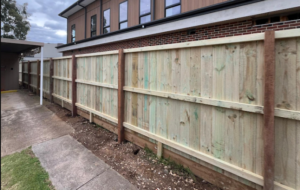
- Lapped and capped timber: overlapping palings reduce gaps and add thickness, giving a more natural look.
- Acoustic panel systems: purpose-designed panels built for sound reduction, often with a clean, modern finish.
- Masonry and rendered walls: very heavy and effective at blocking sound, though more expensive and slower to build.
- Combination systems: for example, a solid lower section with additional mass, sealed to the ground with a plinth or sleepers.
The best choice depends on your noise source, budget, property style and any council requirements.
Height Limits and Permits
In Victoria, side and rear boundary fences can generally be built up to 2 metres high without a building permit. Taller acoustic fences, or fences in certain front-yard and corner locations, may need a building permit and must meet siting rules. If your property sits under a planning overlay, extra controls may apply.
Properties fronting major arterial roads may be allowed slightly higher front fences than standard streets. Always check with your local council or a building surveyor before you build, and we can help you understand what is likely to apply to your site.
Other Ways to Boost Noise Reduction
An acoustic fence is the most effective outdoor solution, but you can improve results further with:
- Dense planting: hedges and garden beds in front of the fence soften sound and look great.
- Water features: the gentle sound of running water helps mask background traffic noise.
- Upgraded windows and doors: double glazing and good seals reduce noise inside the home.
- Solid gates: make sure gates are as solid and well-sealed as the fence itself.
Is Acoustic Fencing Worth the Investment?
For many families living on busy roads, the answer is a clear yes. A quieter backyard is more usable, more relaxing and more private. It can make outdoor entertaining enjoyable again, help with sleep in road-facing rooms, and add genuine appeal when it comes time to sell.
Acoustic fencing generally costs more than a standard fence because of the heavier materials, sealing and extra labour involved, but it is a long-term improvement to your home’s comfort and liveability.
Acoustic Fencing for Businesses
Noise is not just a residential issue. Childcare centres, schools, medical clinics, warehouses and commercial sites often need acoustic fencing to meet planning conditions or reduce the impact of their operations on neighbouring homes. In some cases, a planning permit or acoustic report will specify the height and performance required, and the fence must be built to match.
Questions to Ask Your Fencing Installer
- What materials and system do you recommend for my noise source?
- How will the base and panel joins be sealed?
- What height is needed to block the line of sight to the road?
- Will the fence need a building permit?
- What warranty comes with materials and workmanship?
A good installer will answer these clearly and explain how the design suits your property.
Get Expert Acoustic Fencing from A Class Fencing Solution
At A Class Fencing Solution, we design and install acoustic fencing for homes and businesses across Melbourne and Victoria. We look at your noise source, property layout and local requirements, then recommend a fence that delivers real results without compromising on looks.
With direct material supply and in-house powder coating, we can also match your fence to your home’s colours and style.
Tired of the traffic noise? Visit aclassfencingsolution.com.au to request a free on-site quote, and find out how much quieter your home could be.
[/fusion_text][/fusion_builder_column][/fusion_builder_row][/fusion_builder_container]


Leave A Comment