

Storm season can bring heavy rainfall, strong winds, and flying debris that place significant stress on residential and commercial fencing. While fences are designed to withstand everyday weather conditions, severe storms can sometimes cause damage that affects their appearance, stability, and long-term performance.
Fortunately, there are several proactive steps homeowners can take to help protect their fencing before storm season arrives.
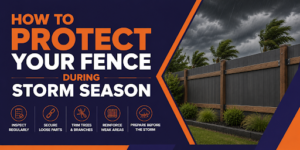
Why Storms Can Impact Fencing
Fences are constantly exposed to outdoor conditions, making them vulnerable during extreme weather events.
Common storm-related risks include:
- Strong winds
- Heavy rain
- Waterlogged soil
- Falling branches
- Flying debris
- Ground movement
Understanding these risks can help homeowners take preventative action before storms occur.
Inspect Your Fence Before Storm Season
A thorough inspection can help identify weaknesses that may worsen during severe weather.
Check for:
- Loose fence posts
- Leaning sections
- Damaged panels
- Loose fasteners
- Signs of deterioration
Repairing minor issues before storm season can help improve overall fence performance.
Check Fence Posts and Foundations
Fence posts provide essential support for the entire structure.
Inspect posts for:
- Movement
- Leaning
- Cracks
- Soil erosion around the base
Strong and stable posts help the fence withstand increased pressure during windy conditions.
Trim Nearby Trees and Branches
Overhanging branches can become a hazard during storms.
Strong winds may cause branches to:
- Strike fence panels
- Damage gates
- Create structural issues
Regular tree maintenance can help reduce the risk of storm-related fence damage.
Maintain Proper Drainage
Poor drainage can weaken soil around fence posts and increase the likelihood of movement during heavy rainfall.
To improve drainage:
- Clear blocked drains
- Remove debris from drainage channels
- Ensure water flows away from fence lines
- Monitor areas where water tends to collect
Effective drainage helps support fence stability during wet weather.
Secure Loose Outdoor Items
Before a major storm, secure or store outdoor items that could become airborne.
This may include:
- Garden tools
- Outdoor furniture
- Decorative items
- Equipment stored near the fence
Reducing potential debris helps minimise the risk of impact damage.
Repair Small Issues Promptly
Small problems can quickly become larger issues during severe weather.
Address concerns such as:
- Loose panels
- Minor cracks
- Damaged components
- Gate alignment issues
Routine repairs can help strengthen the overall fence structure.
Inspect Your Fence After a Storm
Once conditions are safe, inspect the fence for signs of damage.
Look for:
- Leaning sections
- Loose posts
- Damaged panels
- Gate problems
- Debris impact
Early repairs can help prevent additional deterioration.
The Importance of Regular Fence Maintenance
Ongoing maintenance plays a major role in protecting your investment.
Benefits of regular fence maintenance include:
- Improved durability
- Better weather resistance
- Reduced repair costs
- Extended fence lifespan
- Enhanced property appearance
A well-maintained fence is generally better prepared to withstand changing weather conditions.
Why Choose A Class Fencing Solution?
A Class Fencing Solution provides professional fencing services across Melbourne, helping homeowners and businesses improve security, privacy, and property presentation.
Our team focuses on delivering quality fencing solutions backed by professional workmanship and reliable service.
Whether you’re planning a new fence installation or maintaining an existing fence, we can help you achieve a durable and long-lasting result.
Final Thoughts
Storm season can place significant stress on fencing systems, but preventative maintenance can help reduce the risk of damage. By inspecting your fence regularly, maintaining drainage, trimming nearby vegetation, and addressing repairs promptly, you can improve the durability and performance of your fence throughout the year.
A proactive approach to fence maintenance not only protects your investment but also helps maintain the safety, privacy, and appearance of your property.


Leave A Comment