

Every pool owner in Victoria eventually has the same conversation with a building surveyor, and it usually starts with a clipboard and a slightly tense expression. Pool fencing compliance isn’t complicated once you know what’s being checked, but it trips up a surprising number of otherwise careful homeowners, usually over small details rather than big obvious failures. A pot plant in the wrong spot has failed more pool inspections than an actual broken fence ever has.
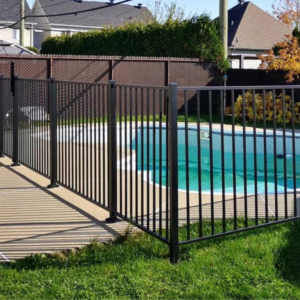
Here’s what Victoria actually requires, and the checklist the A Class Fencing Solution team runs through with clients before their fence goes anywhere near an inspector.
A quick note before we start: this article is general guidance, not a substitute for a site-specific assessment. Pool barrier requirements can vary depending on your pool’s age, when it was installed, and site-specific factors, so always confirm the detail of your obligations with your local council or a registered building surveyor before you finalise a fence design.
The Standard You’re Actually Being Assessed Against
Victorian pool fencing compliance runs under the Building Regulations 2018, referencing Australian Standard AS 1926.1-2012 for barrier design. It applies to any pool or spa capable of holding more than 300mm of water, which catches a lot of above-ground and portable pools that owners assume are exempt.
Height: 1200mm, Measured Properly
Your barrier needs to stand at least 1200mm above the ground it’s protecting. That sounds simple until you factor in sloping ground, garden beds that have crept up over the years, or decking added after the fence went in, all of which can quietly eat into your effective barrier height without anyone touching the fence itself. It’s worth physically re-measuring your fence height from current ground level periodically, not just trusting that it was compliant when it was installed.
The Gap Under the Fence
The maximum permitted gap between the bottom of the fence and the ground is 100mm. This one catches people out more than almost any other requirement, because it’s not usually a design flaw. It’s ground movement. Garden beds get mulched up, soil erodes during heavy rain, dogs dig, and gradually a compliant 80mm gap becomes a non-compliant 130mm gap without a single component of the fence changing. If your pool fence sits on soft or garden-adjacent ground, this is worth checking every few months, not just at inspection time.
The Non-Climbable Zone
This is the requirement that catches out the most otherwise-diligent pool owners. Victoria requires a non-climbable zone extending 900mm vertically on the outside of the barrier, measured from the lowest surrounding ground level. Within that zone, nothing can sit that a child could use as a step or handhold to get over the fence: no pot plants, no BBQs, no stacked pool equipment, no outdoor furniture pulled up against the fence line, and no tree branches or garden features positioned within reach.
This zone gets violated constantly, and almost never on purpose. Someone moves the barbecue for a party and forgets to move it back. A pot plant collection grows over a few seasons until one ends up too close to the fence. It’s the single most common reason a previously compliant pool fails a routine reinspection, and it costs nothing to fix, just vigilance about what lives near the boundary.
Gates: The Part Most Likely to Fail
Gates carry their own specific requirements, and for good reason: they’re the part of the barrier system with moving parts, which means they’re the part most likely to fail over time.
- The gate must open outward, away from the pool area, never inward toward the water.
- It needs a self-closing mechanism that will close the gate from any open position, not just from fully open. A gate that only self-closes from 90 degrees but sticks halfway isn’t compliant.
- It requires a self-latching device, with the release mechanism positioned at least 1500mm above ground level, or otherwise located so it’s truly out of reach for small children.
Hinges sag, self-closers weaken with age and weather exposure, and latches can be propped open by well-meaning adults trying to carry pool toys through without wrestling the gate every trip. All of these are common, all of them are compliance failures, and all of them are cheap to fix if you catch them early.
Inspections and Certification
Victoria requires registered pools and spas to be inspected every four years by a registered building surveyor, with the outcome submitted as a Form 23 certificate of pool barrier compliance to your local council. New pools need this certification before the pool is filled and used. If you’re planning fence works around an existing pool (repairs, a redesign, or a full replacement), it’s worth timing the job with your next scheduled inspection where possible, so you’re not paying for two separate call-outs.
A Practical Pre-Inspection Checklist
Before your next inspection, it’s worth walking your own barrier and checking:
- Fence height is a genuine 1200mm from current ground level, all the way around, not just at the point it was originally measured.
- No gap under the fence exceeds 100mm anywhere along its run, including low points and garden bed areas.
- Nothing climbable sits within 900mm of the outside of the fence: furniture, pot plants, equipment, or overgrown garden features.
- The gate swings away from the pool, closes fully and latches from any position you release it at.
- Hinges, closers and latches move freely, without excessive force or sticking.
Getting It Right the First Time
Compliant pool fencing isn’t just a box-ticking exercise. It’s genuinely one of the most effective things standing between a backyard pool and a preventable tragedy, which is exactly why the standard is as detailed as it is. If your existing fence is due for reinspection, showing its age, or you’re planning a new pool build, A Class Fencing Solution can install or upgrade a barrier that’s built to pass, and built to stay that way, not just scrape through on inspection day. Get in touch and we’ll talk through what your specific site needs before you’re standing in front of a surveyor.


Leave A Comment