

Colorbond fencing has become one of ,the most popular fencing solutions for Australian homes and commercial properties. Known for its modern appearance, durability, and low maintenance requirements, Colorbond fencing is widely used for boundary fencing, privacy screens, and outdoor landscaping projects.
While Colorbond fences are designed to handle tough Australian weather conditions, like any outdoor structure, they can still develop issues over time. Exposure to strong winds, heavy rain, shifting soil, and general wear can sometimes affect the appearance or performance of the fence.
The good news is that many common Colorbond fence problems can be identified early and fixed before they become major repairs.
At A Class Fencing Solution, Colorbond fencing continues to be a popular choice for homeowners looking for strength, privacy, and long term outdoor durability. Understanding common fencing issues and how to manage them can help extend the lifespan of the fence while keeping it looking its best.
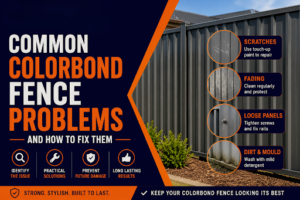
Loose or Leaning Fence Panels
One of the most common issues with Colorbond fencing is loose or leaning fence panels. This problem is often caused by strong winds, unstable soil, poor installation, or movement in the fence posts over time.
Leaning sections can make the fence look uneven and may reduce its overall stability if left unattended.
How to Fix It
The first step is checking whether the issue comes from loose panels or shifting fence posts. Tightening screws, brackets, or rails may solve smaller alignment problems.
If the fence posts have shifted due to soft ground or soil movement, the posts may need to be reset with fresh concrete for improved support.
Regular inspections after storms or strong winds can help identify loose sections early before further damage occurs.
Rust or Corrosion
Although Colorbond steel is designed with protective coatings to resist corrosion, rust can still appear in certain situations. Scratches, poor drainage, salt exposure, or long term moisture buildup may eventually affect the protective surface.
Coastal areas are particularly exposed to salt air, which can increase the risk of corrosion if fencing is not properly maintained.
How to Fix It
Small rust spots should be cleaned and treated as soon as possible to prevent further spreading. Mild surface corrosion can often be removed carefully before applying touch up coatings designed for Colorbond surfaces.
Keeping the fence clean and ensuring water does not remain trapped around the base of the fence can also help reduce future corrosion risks. At A Class Fencing Solution, quality fencing materials are selected to support long term outdoor performance in Australian conditions.
Fence Noise During Windy Conditions
Some homeowners notice rattling or vibration noises coming from their Colorbond fence during strong winds. This usually happens when fence panels move slightly against rails or fasteners.
While this issue may not always affect structural strength, it can become frustrating in areas regularly exposed to windy conditions.
How to Fix It
Checking and tightening loose screws, rails, or brackets is often the simplest solution. In some cases, additional reinforcement or adjusting panel alignment may help reduce movement and vibration.
Professional installation also plays an important role in minimising fence noise and improving overall stability.
Scratches and Surface Damage
Colorbond fences can occasionally develop scratches from garden equipment, falling branches, pets, or accidental impacts. While minor marks may only affect appearance, deeper scratches can expose the steel underneath and increase the risk of corrosion.
How to Fix It
Small scratches can often be repaired using touch up paint designed for Colorbond finishes. Cleaning the area before applying repairs helps improve adhesion and appearance.
Avoid using abrasive cleaning products or harsh metal brushes, as these can damage the protective coating further.
Preventing tree branches or heavy objects from rubbing against the fence can also reduce future surface damage.
Dirt, Mould, and Staining
Outdoor fencing is constantly exposed to dust, rain, pollution, and organic material. Over time, dirt buildup, mould, or staining may affect the appearance of Colorbond fencing, particularly in shaded or damp areas.
How to Fix It
Regular cleaning helps maintain the appearance of the fence while preventing long term buildup. Washing the fence occasionally with water and a soft cloth or sponge is usually enough for general maintenance.
For stubborn dirt or mould, mild cleaning solutions may help remove stains without damaging the surface coating.
Keeping plants and vegetation trimmed away from the fence can also improve airflow and reduce moisture buildup.
Fence Post Movement
Fence posts provide the main structural support for Colorbond fencing. If posts begin shifting or sinking, the entire fence may become uneven or unstable.
This issue is commonly caused by:
Soil movement
Poor drainage
Inadequate post installation
Ground erosion
Heavy wind pressure
How to Fix It
Minor movement may sometimes be corrected by reinforcing the surrounding ground. More significant movement usually requires resetting or replacing affected posts.
Proper drainage around fence lines is important for reducing water related soil movement over time.
At A Class Fencing Solution, quality fencing installation and reliable materials help support long lasting fence performance across residential and commercial projects.
Fading Over Time
Although Colorbond fencing is designed to retain colour well, long term UV exposure may eventually cause slight fading, especially in areas exposed to intense sunlight for many years.
How to Fix It
Routine cleaning can help maintain the appearance of the fence and remove surface contaminants that may dull the finish. In most cases, modern Colorbond fencing maintains its appearance for many years with minimal maintenance.
Choosing quality materials and proper installation from the beginning can also improve long term colour performance.
Drainage Problems Around the Fence
Poor drainage can create ongoing problems for any fencing system. Water pooling near fence posts or beneath the fence can contribute to soil erosion, post instability, and corrosion risks.
How to Fix It
Improving drainage around the fence line can help protect both the fence structure and surrounding landscaping. This may include:
Redirecting downpipes
Improving ground grading
Installing drainage solutions
Removing excess soil buildup near the fence
Managing water flow properly helps reduce long term maintenance problems and improves fence stability.
Preventative Maintenance Tips
Regular maintenance is one of the best ways to avoid major Colorbond fencing repairs. Simple inspections and cleaning routines can help identify small issues before they become more expensive problems.
Helpful maintenance tips include:
Clean the fence regularly
Inspect posts and fasteners after storms
Trim nearby vegetation
Address scratches early
Check drainage around the fence line
Tighten loose components when needed
These small maintenance steps can significantly improve the lifespan and appearance of the fence.
Final Thoughts
Colorbond fencing continues to be a reliable and modern fencing solution for Australian homes because of its durability, privacy, and low maintenance requirements. However, like any outdoor structure, occasional issues such as loose panels, rust, scratches, or drainage problems may still occur over time.
Understanding common Colorbond fence problems and addressing them early can help prevent larger repairs while maintaining the fence’s appearance and structural performance.
At A Class Fencing Solution, quality fencing products and professional installation solutions continue to support homeowners looking for durable and practical outdoor fencing systems built for Australian conditions.


Leave A Comment